








- Benefits:
-
Reduces feelings of being overwhelmed
-
Increases productivity
-
Raises self-esteem
Tips:
-
-
-
Use calendars and to-do lists to help you stay organized.
-
Break huge tasks into smaller ones to stop putting them off.
-
7. Limiting Screen Time and Technology Detox
It’s easy to get too into technology in this digital age. It might be stressful and make you anxious to get notifications and updates on social media all the time. Healthline says that taking breaks from screens and doing activities like reading, going on walks in nature, or working on hobbies could help you feel more balanced and less stressed.
- Benefits:
-
Makes you less mentally tired
-
Helps you be more mindful
-
Improves relationships in the real world
-
- Tips:
-
Don’t spend too much time in front of a screen, especially before bed.
-
Spend time outside to get away from digital distractions.
-
A Comparison of Habits for Stress Reduction Techniques
| Technique | Effectiveness | Ease of Practice | Time Commitment |
|---|---|---|---|
| Exercise | High | Moderate | 30 minutes/day |
| Mindfulness Meditation | High | Moderate | 10–15 minutes/day |
| Balanced Diet | Moderate | Easy | Ongoing daily |
| Adequate Sleep | High | Easy | 7–9 hours/night |
| Social Connections | High | Moderate | Ongoing |
| Time Management | Moderate | Moderate | Ongoing |
| Technology Detox | Moderate | Easy | 1–2 hours/day |
FAQs About Healthy Daily Habits for Stress Reduction
1. After you start practicing healthy things, how long does it take to notice a drop in stress?
The benefits vary according on the individual, but many people begin to notice a reduction in stress within a few weeks of constant practice. For instance, exercising frequently can make you feel better in just a few sessions, whereas the effects of mindfulness meditation might take longer to show up.
2. What is the greatest workout for stress reduction?
There is no one-size-fits-all response to this subject because the ideal exercise depends on the person. However, activities like yoga, walking, cycling, or swimming have been proved to have positive impacts on lowering stress and enhancing general well-being.
3. Can nutrition genuinely influence my stress levels?
Yes the nutrition has plays an important role in maintaing stress. Nutrient rich diets will controle reduce inflammation and blood sugar levels, that aids in manage stress. Conversely high caffine, or high sugar foods can elevate cortisol levels, caused stress.
4. What is the optimal time to practice mindfulness meditation?
When you will practice meditation, mindfulness at any time of the day, more find that starting the morning with a low meditation support to create a positive tone through out the day. Night meditation could also help you relax before sleep
Conclusion: The Path to Sustainable Stress Reduction
Adding habits for stress reduction into your woekouts isone of the most important ways to relieve stress and manage overall health. By gibving importance to exercise, balanced nutrition, mindful practices, strong social connections and adequate sleep. You can build a lifestyle that is not only lowers stress but also increase your quality of life
You have to know stress management is not about relieving all the stressors but about improving the strategies and resilience to controle effectively. By making small, always the same changes to your every day habiits. You can create a more balanced life, calmer and face the difficulties of the life with greater ease and confidence.
Utilizing these practices may effort and time, but the rewards of loweress good health and greater jou are well worth it.
- 5 Meditation Techniques for Emotional Balance: A Path to Inner Peace
- 8 Effective Habits to Boost Mental Clarity and Focus
- 7 Natural Ways to Reduce Anxiety and Stress Daily: A Comprehensive Guide
- 6 Mindfulness Practices for Mental Health: A Path to Inner Peace and Emotional Resilience
- How to Improve Your Mood with Healthy Habits: A Comprehensive Guide
- Home
- Category Healthy Habits
- Benefits:
-
It makes you feel better and provides you more energy.
-
Helps maintain blood sugar levels stable
-
Makes you think better
Tips:
-
-
-
Eat foods high in omega-3 fatty acids, such salmon, walnuts, and flaxseeds, to minimize inflammation and keep your brain healthy.
-
Don’t consume a lot of sugary snacks because they could make your blood sugar decline and make you grumpy.
-
4. Adequate Sleep
Stress and sleep are closely related. Stress can make it hard to sleep well, and not getting enough sleep can make your body produce more stress chemicals. The Sleep Foundation says that having a nightly routine that helps you relax is beneficial for both lowering stress and achieving better sleep.
- Benefits:
-
Brings back energy levels
-
Helps you remember things and stay focused
-
Makes you feel better
-
- Tips:
-
Every night, you should strive to get 7 to 9 hours of healthy sleep.
-
Make a schedule for when you go to bed.
-
Stay away from devices for at least an hour before bed to avoid blue light interference.
-
5. Social Connections
Having strong social links can help you handle stress and give you emotional support. For mental wellness, it’s really crucial to connect with other people. It could be because you spend time with family and friends or join an organization in your town. Psychology Today says that those with strong social support networks are less stressed and recover from stressful events faster.
- Benefits:
-
Makes you stronger on the inside
-
Makes folks feel like they are part of something.
-
Gives folks a way to talk about their stress
-
- Tips:
-
Make it a high point to see friends and family often.
-
To meet new people and develop real connections, join a club or volunteer.
-
6. Time Management and Organization
 When you feel like you have too much to accomplish and too many responsibilities, you can get stressed out. Good time management will help you remain on top of things and attain your goals without being too tired. Forbes suggests that you may manage your time better by developing a list of things to do, setting limits, and breaking big tasks into smaller ones.
- Benefits:
-
Reduces feelings of being overwhelmed
-
Increases productivity
-
Raises self-esteem
Tips:
-
-
-
Use calendars and to-do lists to help you stay organized.
-
Break huge tasks into smaller ones to stop putting them off.
-
7. Limiting Screen Time and Technology Detox
It’s easy to get too into technology in this digital age. It might be stressful and make you anxious to get notifications and updates on social media all the time. Healthline says that taking breaks from screens and doing activities like reading, going on walks in nature, or working on hobbies could help you feel more balanced and less stressed.
- Benefits:
-
Makes you less mentally tired
-
Helps you be more mindful
-
Improves relationships in the real world
-
- Tips:
-
Don’t spend too much time in front of a screen, especially before bed.
-
Spend time outside to get away from digital distractions.
-
A Comparison of Habits for Stress Reduction Techniques
| Technique | Effectiveness | Ease of Practice | Time Commitment |
|---|---|---|---|
| Exercise | High | Moderate | 30 minutes/day |
| Mindfulness Meditation | High | Moderate | 10–15 minutes/day |
| Balanced Diet | Moderate | Easy | Ongoing daily |
| Adequate Sleep | High | Easy | 7–9 hours/night |
| Social Connections | High | Moderate | Ongoing |
| Time Management | Moderate | Moderate | Ongoing |
| Technology Detox | Moderate | Easy | 1–2 hours/day |
FAQs About Healthy Daily Habits for Stress Reduction
1. After you start practicing healthy things, how long does it take to notice a drop in stress?
The benefits vary according on the individual, but many people begin to notice a reduction in stress within a few weeks of constant practice. For instance, exercising frequently can make you feel better in just a few sessions, whereas the effects of mindfulness meditation might take longer to show up.
2. What is the greatest workout for stress reduction?
There is no one-size-fits-all response to this subject because the ideal exercise depends on the person. However, activities like yoga, walking, cycling, or swimming have been proved to have positive impacts on lowering stress and enhancing general well-being.
3. Can nutrition genuinely influence my stress levels?
Yes the nutrition has plays an important role in maintaing stress. Nutrient rich diets will controle reduce inflammation and blood sugar levels, that aids in manage stress. Conversely high caffine, or high sugar foods can elevate cortisol levels, caused stress.
4. What is the optimal time to practice mindfulness meditation?
When you will practice meditation, mindfulness at any time of the day, more find that starting the morning with a low meditation support to create a positive tone through out the day. Night meditation could also help you relax before sleep
Conclusion: The Path to Sustainable Stress Reduction
Adding habits for stress reduction into your woekouts isone of the most important ways to relieve stress and manage overall health. By gibving importance to exercise, balanced nutrition, mindful practices, strong social connections and adequate sleep. You can build a lifestyle that is not only lowers stress but also increase your quality of life
You have to know stress management is not about relieving all the stressors but about improving the strategies and resilience to controle effectively. By making small, always the same changes to your every day habiits. You can create a more balanced life, calmer and face the difficulties of the life with greater ease and confidence.
Utilizing these practices may effort and time, but the rewards of loweress good health and greater jou are well worth it.
- 5 Meditation Techniques for Emotional Balance: A Path to Inner Peace
- 8 Effective Habits to Boost Mental Clarity and Focus
- 7 Natural Ways to Reduce Anxiety and Stress Daily: A Comprehensive Guide
- 6 Mindfulness Practices for Mental Health: A Path to Inner Peace and Emotional Resilience
- How to Improve Your Mood with Healthy Habits: A Comprehensive Guide
- Home
- Category Healthy Habits
- Benefits:
-
It makes you feel better and provides you more energy.
-
Helps maintain blood sugar levels stable
-
Makes you think better
Tips:
-
-
-
Eat foods high in omega-3 fatty acids, such salmon, walnuts, and flaxseeds, to minimize inflammation and keep your brain healthy.
-
Don’t consume a lot of sugary snacks because they could make your blood sugar decline and make you grumpy.
-
4. Adequate Sleep
Stress and sleep are closely related. Stress can make it hard to sleep well, and not getting enough sleep can make your body produce more stress chemicals. The Sleep Foundation says that having a nightly routine that helps you relax is beneficial for both lowering stress and achieving better sleep.
- Benefits:
-
Brings back energy levels
-
Helps you remember things and stay focused
-
Makes you feel better
-
- Tips:
-
Every night, you should strive to get 7 to 9 hours of healthy sleep.
-
Make a schedule for when you go to bed.
-
Stay away from devices for at least an hour before bed to avoid blue light interference.
-
5. Social Connections
Having strong social links can help you handle stress and give you emotional support. For mental wellness, it’s really crucial to connect with other people. It could be because you spend time with family and friends or join an organization in your town. Psychology Today says that those with strong social support networks are less stressed and recover from stressful events faster.
- Benefits:
-
Makes you stronger on the inside
-
Makes folks feel like they are part of something.
-
Gives folks a way to talk about their stress
-
- Tips:
-
Make it a high point to see friends and family often.
-
To meet new people and develop real connections, join a club or volunteer.
-
6. Time Management and Organization
 When you feel like you have too much to accomplish and too many responsibilities, you can get stressed out. Good time management will help you remain on top of things and attain your goals without being too tired. Forbes suggests that you may manage your time better by developing a list of things to do, setting limits, and breaking big tasks into smaller ones.
- Benefits:
-
Reduces feelings of being overwhelmed
-
Increases productivity
-
Raises self-esteem
Tips:
-
-
-
Use calendars and to-do lists to help you stay organized.
-
Break huge tasks into smaller ones to stop putting them off.
-
7. Limiting Screen Time and Technology Detox
It’s easy to get too into technology in this digital age. It might be stressful and make you anxious to get notifications and updates on social media all the time. Healthline says that taking breaks from screens and doing activities like reading, going on walks in nature, or working on hobbies could help you feel more balanced and less stressed.
- Benefits:
-
Makes you less mentally tired
-
Helps you be more mindful
-
Improves relationships in the real world
-
- Tips:
-
Don’t spend too much time in front of a screen, especially before bed.
-
Spend time outside to get away from digital distractions.
-
A Comparison of Habits for Stress Reduction Techniques
| Technique | Effectiveness | Ease of Practice | Time Commitment |
|---|---|---|---|
| Exercise | High | Moderate | 30 minutes/day |
| Mindfulness Meditation | High | Moderate | 10–15 minutes/day |
| Balanced Diet | Moderate | Easy | Ongoing daily |
| Adequate Sleep | High | Easy | 7–9 hours/night |
| Social Connections | High | Moderate | Ongoing |
| Time Management | Moderate | Moderate | Ongoing |
| Technology Detox | Moderate | Easy | 1–2 hours/day |
FAQs About Healthy Daily Habits for Stress Reduction
1. After you start practicing healthy things, how long does it take to notice a drop in stress?
The benefits vary according on the individual, but many people begin to notice a reduction in stress within a few weeks of constant practice. For instance, exercising frequently can make you feel better in just a few sessions, whereas the effects of mindfulness meditation might take longer to show up.
2. What is the greatest workout for stress reduction?
There is no one-size-fits-all response to this subject because the ideal exercise depends on the person. However, activities like yoga, walking, cycling, or swimming have been proved to have positive impacts on lowering stress and enhancing general well-being.
3. Can nutrition genuinely influence my stress levels?
Yes the nutrition has plays an important role in maintaing stress. Nutrient rich diets will controle reduce inflammation and blood sugar levels, that aids in manage stress. Conversely high caffine, or high sugar foods can elevate cortisol levels, caused stress.
4. What is the optimal time to practice mindfulness meditation?
When you will practice meditation, mindfulness at any time of the day, more find that starting the morning with a low meditation support to create a positive tone through out the day. Night meditation could also help you relax before sleep
Conclusion: The Path to Sustainable Stress Reduction
Adding habits for stress reduction into your woekouts isone of the most important ways to relieve stress and manage overall health. By gibving importance to exercise, balanced nutrition, mindful practices, strong social connections and adequate sleep. You can build a lifestyle that is not only lowers stress but also increase your quality of life
You have to know stress management is not about relieving all the stressors but about improving the strategies and resilience to controle effectively. By making small, always the same changes to your every day habiits. You can create a more balanced life, calmer and face the difficulties of the life with greater ease and confidence.
Utilizing these practices may effort and time, but the rewards of loweress good health and greater jou are well worth it.
- 5 Meditation Techniques for Emotional Balance: A Path to Inner Peace
- 8 Effective Habits to Boost Mental Clarity and Focus
- 7 Natural Ways to Reduce Anxiety and Stress Daily: A Comprehensive Guide
- 6 Mindfulness Practices for Mental Health: A Path to Inner Peace and Emotional Resilience
- How to Improve Your Mood with Healthy Habits: A Comprehensive Guide
- Home
- Category Healthy Habits
- Benefits:
-
Reduces anxiety and depression -
It makes things clearer and easier to pay attention to.
-
Makes you more emotionally intelligent
Tips:
-
-
-
Take 5 to 10 minutes every day to breathe or meditate attentively.
-
Stop what you’re doing and pay attention to your breath.
-
3. Healthy Diet Choices
 What we eat has a huge impact on how we feel. Eating a wide range of foods, like fruits, vegetables, whole grains, lean proteins, and healthy fats, gives your brain the nutrients it needs to work efficiently and helps you deal with stress. Bad dietary habits, such ingesting too much sugar, coffee, and processed meals, can make stress worse
- Benefits:
-
It makes you feel better and provides you more energy.
-
Helps maintain blood sugar levels stable
-
Makes you think better
Tips:
-
-
-
Eat foods high in omega-3 fatty acids, such salmon, walnuts, and flaxseeds, to minimize inflammation and keep your brain healthy.
-
Don’t consume a lot of sugary snacks because they could make your blood sugar decline and make you grumpy.
-
4. Adequate Sleep
Stress and sleep are closely related. Stress can make it hard to sleep well, and not getting enough sleep can make your body produce more stress chemicals. The Sleep Foundation says that having a nightly routine that helps you relax is beneficial for both lowering stress and achieving better sleep.
- Benefits:
-
Brings back energy levels
-
Helps you remember things and stay focused
-
Makes you feel better
-
- Tips:
-
Every night, you should strive to get 7 to 9 hours of healthy sleep.
-
Make a schedule for when you go to bed.
-
Stay away from devices for at least an hour before bed to avoid blue light interference.
-
5. Social Connections
Having strong social links can help you handle stress and give you emotional support. For mental wellness, it’s really crucial to connect with other people. It could be because you spend time with family and friends or join an organization in your town. Psychology Today says that those with strong social support networks are less stressed and recover from stressful events faster.
- Benefits:
-
Makes you stronger on the inside
-
Makes folks feel like they are part of something.
-
Gives folks a way to talk about their stress
-
- Tips:
-
Make it a high point to see friends and family often.
-
To meet new people and develop real connections, join a club or volunteer.
-
6. Time Management and Organization
 When you feel like you have too much to accomplish and too many responsibilities, you can get stressed out. Good time management will help you remain on top of things and attain your goals without being too tired. Forbes suggests that you may manage your time better by developing a list of things to do, setting limits, and breaking big tasks into smaller ones.
- Benefits:
-
Reduces feelings of being overwhelmed
-
Increases productivity
-
Raises self-esteem
Tips:
-
-
-
Use calendars and to-do lists to help you stay organized.
-
Break huge tasks into smaller ones to stop putting them off.
-
7. Limiting Screen Time and Technology Detox
It’s easy to get too into technology in this digital age. It might be stressful and make you anxious to get notifications and updates on social media all the time. Healthline says that taking breaks from screens and doing activities like reading, going on walks in nature, or working on hobbies could help you feel more balanced and less stressed.
- Benefits:
-
Makes you less mentally tired
-
Helps you be more mindful
-
Improves relationships in the real world
-
- Tips:
-
Don’t spend too much time in front of a screen, especially before bed.
-
Spend time outside to get away from digital distractions.
-
A Comparison of Habits for Stress Reduction Techniques
| Technique | Effectiveness | Ease of Practice | Time Commitment |
|---|---|---|---|
| Exercise | High | Moderate | 30 minutes/day |
| Mindfulness Meditation | High | Moderate | 10–15 minutes/day |
| Balanced Diet | Moderate | Easy | Ongoing daily |
| Adequate Sleep | High | Easy | 7–9 hours/night |
| Social Connections | High | Moderate | Ongoing |
| Time Management | Moderate | Moderate | Ongoing |
| Technology Detox | Moderate | Easy | 1–2 hours/day |
FAQs About Healthy Daily Habits for Stress Reduction
1. After you start practicing healthy things, how long does it take to notice a drop in stress?
The benefits vary according on the individual, but many people begin to notice a reduction in stress within a few weeks of constant practice. For instance, exercising frequently can make you feel better in just a few sessions, whereas the effects of mindfulness meditation might take longer to show up.
2. What is the greatest workout for stress reduction?
There is no one-size-fits-all response to this subject because the ideal exercise depends on the person. However, activities like yoga, walking, cycling, or swimming have been proved to have positive impacts on lowering stress and enhancing general well-being.
3. Can nutrition genuinely influence my stress levels?
Yes the nutrition has plays an important role in maintaing stress. Nutrient rich diets will controle reduce inflammation and blood sugar levels, that aids in manage stress. Conversely high caffine, or high sugar foods can elevate cortisol levels, caused stress.
4. What is the optimal time to practice mindfulness meditation?
When you will practice meditation, mindfulness at any time of the day, more find that starting the morning with a low meditation support to create a positive tone through out the day. Night meditation could also help you relax before sleep
Conclusion: The Path to Sustainable Stress Reduction
Adding habits for stress reduction into your woekouts isone of the most important ways to relieve stress and manage overall health. By gibving importance to exercise, balanced nutrition, mindful practices, strong social connections and adequate sleep. You can build a lifestyle that is not only lowers stress but also increase your quality of life
You have to know stress management is not about relieving all the stressors but about improving the strategies and resilience to controle effectively. By making small, always the same changes to your every day habiits. You can create a more balanced life, calmer and face the difficulties of the life with greater ease and confidence.
Utilizing these practices may effort and time, but the rewards of loweress good health and greater jou are well worth it.
- 5 Meditation Techniques for Emotional Balance: A Path to Inner Peace
- 8 Effective Habits to Boost Mental Clarity and Focus
- 7 Natural Ways to Reduce Anxiety and Stress Daily: A Comprehensive Guide
- 6 Mindfulness Practices for Mental Health: A Path to Inner Peace and Emotional Resilience
- How to Improve Your Mood with Healthy Habits: A Comprehensive Guide
- Home
- Category Healthy Habits
- Benefits:
-
Reduces anxiety and depression -
It makes things clearer and easier to pay attention to.
-
Makes you more emotionally intelligent
Tips:
-
-
-
Take 5 to 10 minutes every day to breathe or meditate attentively.
-
Stop what you’re doing and pay attention to your breath.
-
3. Healthy Diet Choices
 What we eat has a huge impact on how we feel. Eating a wide range of foods, like fruits, vegetables, whole grains, lean proteins, and healthy fats, gives your brain the nutrients it needs to work efficiently and helps you deal with stress. Bad dietary habits, such ingesting too much sugar, coffee, and processed meals, can make stress worse
- Benefits:
-
It makes you feel better and provides you more energy.
-
Helps maintain blood sugar levels stable
-
Makes you think better
Tips:
-
-
-
Eat foods high in omega-3 fatty acids, such salmon, walnuts, and flaxseeds, to minimize inflammation and keep your brain healthy.
-
Don’t consume a lot of sugary snacks because they could make your blood sugar decline and make you grumpy.
-
4. Adequate Sleep
Stress and sleep are closely related. Stress can make it hard to sleep well, and not getting enough sleep can make your body produce more stress chemicals. The Sleep Foundation says that having a nightly routine that helps you relax is beneficial for both lowering stress and achieving better sleep.
- Benefits:
-
Brings back energy levels
-
Helps you remember things and stay focused
-
Makes you feel better
-
- Tips:
-
Every night, you should strive to get 7 to 9 hours of healthy sleep.
-
Make a schedule for when you go to bed.
-
Stay away from devices for at least an hour before bed to avoid blue light interference.
-
5. Social Connections
Having strong social links can help you handle stress and give you emotional support. For mental wellness, it’s really crucial to connect with other people. It could be because you spend time with family and friends or join an organization in your town. Psychology Today says that those with strong social support networks are less stressed and recover from stressful events faster.
- Benefits:
-
Makes you stronger on the inside
-
Makes folks feel like they are part of something.
-
Gives folks a way to talk about their stress
-
- Tips:
-
Make it a high point to see friends and family often.
-
To meet new people and develop real connections, join a club or volunteer.
-
6. Time Management and Organization
 When you feel like you have too much to accomplish and too many responsibilities, you can get stressed out. Good time management will help you remain on top of things and attain your goals without being too tired. Forbes suggests that you may manage your time better by developing a list of things to do, setting limits, and breaking big tasks into smaller ones.
- Benefits:
-
Reduces feelings of being overwhelmed
-
Increases productivity
-
Raises self-esteem
Tips:
-
-
-
Use calendars and to-do lists to help you stay organized.
-
Break huge tasks into smaller ones to stop putting them off.
-
7. Limiting Screen Time and Technology Detox
It’s easy to get too into technology in this digital age. It might be stressful and make you anxious to get notifications and updates on social media all the time. Healthline says that taking breaks from screens and doing activities like reading, going on walks in nature, or working on hobbies could help you feel more balanced and less stressed.
- Benefits:
-
Makes you less mentally tired
-
Helps you be more mindful
-
Improves relationships in the real world
-
- Tips:
-
Don’t spend too much time in front of a screen, especially before bed.
-
Spend time outside to get away from digital distractions.
-
A Comparison of Habits for Stress Reduction Techniques
| Technique | Effectiveness | Ease of Practice | Time Commitment |
|---|---|---|---|
| Exercise | High | Moderate | 30 minutes/day |
| Mindfulness Meditation | High | Moderate | 10–15 minutes/day |
| Balanced Diet | Moderate | Easy | Ongoing daily |
| Adequate Sleep | High | Easy | 7–9 hours/night |
| Social Connections | High | Moderate | Ongoing |
| Time Management | Moderate | Moderate | Ongoing |
| Technology Detox | Moderate | Easy | 1–2 hours/day |
FAQs About Healthy Daily Habits for Stress Reduction
1. After you start practicing healthy things, how long does it take to notice a drop in stress?
The benefits vary according on the individual, but many people begin to notice a reduction in stress within a few weeks of constant practice. For instance, exercising frequently can make you feel better in just a few sessions, whereas the effects of mindfulness meditation might take longer to show up.
2. What is the greatest workout for stress reduction?
There is no one-size-fits-all response to this subject because the ideal exercise depends on the person. However, activities like yoga, walking, cycling, or swimming have been proved to have positive impacts on lowering stress and enhancing general well-being.
3. Can nutrition genuinely influence my stress levels?
Yes the nutrition has plays an important role in maintaing stress. Nutrient rich diets will controle reduce inflammation and blood sugar levels, that aids in manage stress. Conversely high caffine, or high sugar foods can elevate cortisol levels, caused stress.
4. What is the optimal time to practice mindfulness meditation?
When you will practice meditation, mindfulness at any time of the day, more find that starting the morning with a low meditation support to create a positive tone through out the day. Night meditation could also help you relax before sleep
Conclusion: The Path to Sustainable Stress Reduction
Adding habits for stress reduction into your woekouts isone of the most important ways to relieve stress and manage overall health. By gibving importance to exercise, balanced nutrition, mindful practices, strong social connections and adequate sleep. You can build a lifestyle that is not only lowers stress but also increase your quality of life
You have to know stress management is not about relieving all the stressors but about improving the strategies and resilience to controle effectively. By making small, always the same changes to your every day habiits. You can create a more balanced life, calmer and face the difficulties of the life with greater ease and confidence.
Utilizing these practices may effort and time, but the rewards of loweress good health and greater jou are well worth it.
- 5 Meditation Techniques for Emotional Balance: A Path to Inner Peace
- 8 Effective Habits to Boost Mental Clarity and Focus
- 7 Natural Ways to Reduce Anxiety and Stress Daily: A Comprehensive Guide
- 6 Mindfulness Practices for Mental Health: A Path to Inner Peace and Emotional Resilience
- How to Improve Your Mood with Healthy Habits: A Comprehensive Guide
- Home
- Category Healthy Habits

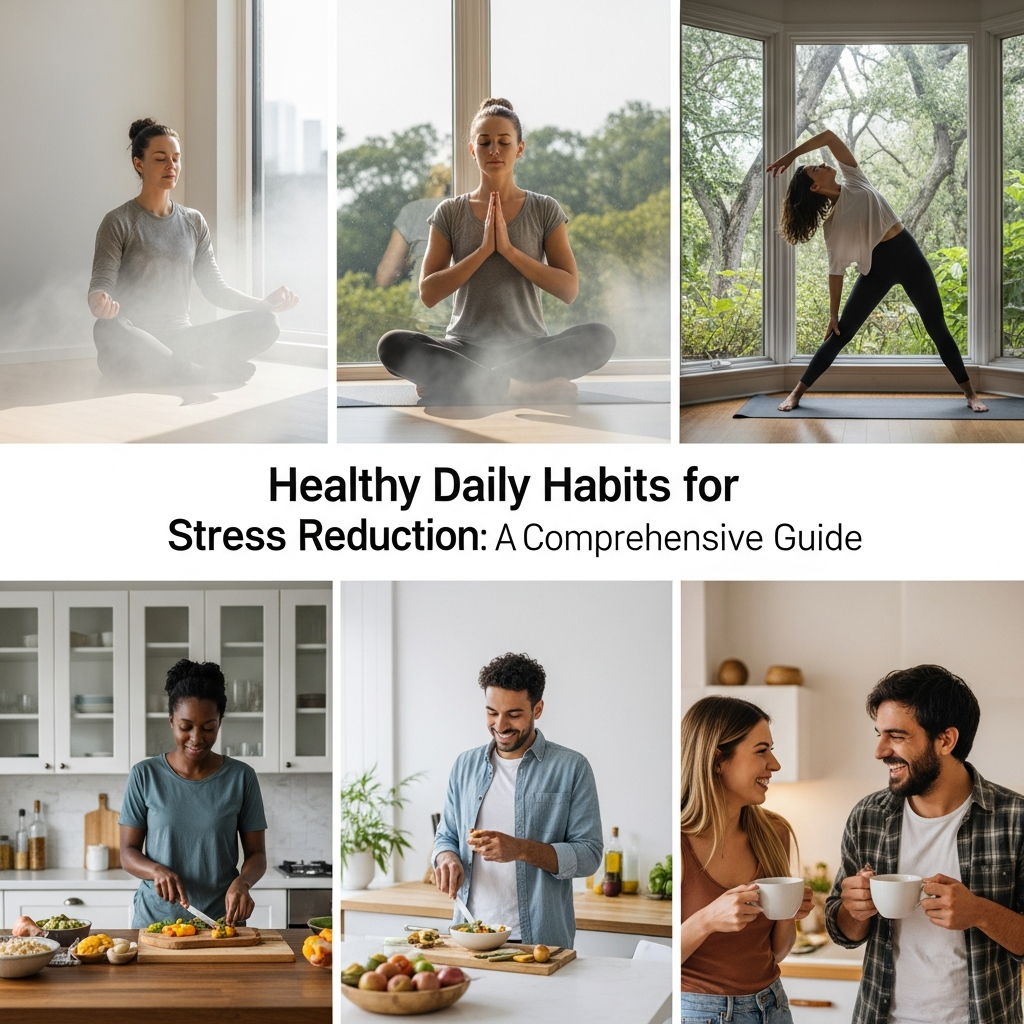
Good daily habits for stress reduction In today’s fast-paced world, stress is becoming a part of life that many individuals can’t avoid. At some time, everyone gets stressed out, whether it’s due of job, personal problems, or just how crazy life is these days. The good news is that making healthy choices every day can help you live a more balanced life and make stress less of a problem.
This post will talk about how daily habits for stress reduction, the science behind dealing with stress, and some tips to help you live a healthy life. We’ll also talk about alternative techniques to deal with stress and answer some of the most popular concerns regarding this vital subject.
Why Healthy Daily Habits for Stress Reduction
Stress affects the body in more than simply a mental or emotional way. Stress that lasts for a long time can cause long-term health problems like heart disease, high blood pressure, and even problems with digestion (Harvard Health). A study by the American Psychological Association found that managing stress via daily practices might make you more resilient, improve your mental health, and make you healthier overall (American Psychological Association). So, making sure to do healthy things every day can have a big effect on how stressed you are and how happy you are with your life in general.
The Science of Stress: Understanding Habits for Stress Reduction
 When we’re in danger, stress makes our bodies go into “fight or flight” mode, which is a natural way to keep us safe. But this response could be hazardous if it happens too often or lasts too long. The body releases hormones such as cortisol and adrenaline. Excessive levels of these hormones can trigger inflammation, anxiety, and fatigue. Studies show that long-term stress may cause brain areas related to memory and emotional control to shrink, which could hinder cognitive ability.
Top Healthy Habits for Stress Reduction or Stress Reduction Habits
Every day, you need to make a lot of good decisions to fight stress. Science indicates that these are some significant elements that can help you feel less stressed:
1. Regular Physical Activity
 Working exercise is one of the finest ways to relax. Exercise releases endorphins, which are sometimes called the body’s natural mood boosters. Every day of exercise, whether it’s a brisk walk, yoga, cycling, or strength training, decreases cortisol levels and makes you feel better emotionally in general.
- Benefits:
-
Reduces anxiety
-
Helps you sleep better
-
Gives you more energy
-
Makes people happier overall
-
- Tips:
-
Every day, try to get at least 30 minutes of moderate activity.
-
To make sure you stick with it, try to do things you enjoy.
-
Yoga and mindfulness-based movements are good options since they mix physical activity with ways to relax.
-
2. Mindful Meditation and Breathing Exercises
Mindfulness meditation and breathing exercises that are done in a regulated form have been proved to make the body relax, which can help with stress and anxiety. Practicing regularly can affect how your brain deals with stress, which can help you control your emotions better.
- Benefits:
-
Reduces anxiety and depression -
It makes things clearer and easier to pay attention to.
-
Makes you more emotionally intelligent
Tips:
-
-
-
Take 5 to 10 minutes every day to breathe or meditate attentively.
-
Stop what you’re doing and pay attention to your breath.
-
3. Healthy Diet Choices
 What we eat has a huge impact on how we feel. Eating a wide range of foods, like fruits, vegetables, whole grains, lean proteins, and healthy fats, gives your brain the nutrients it needs to work efficiently and helps you deal with stress. Bad dietary habits, such ingesting too much sugar, coffee, and processed meals, can make stress worse
- Benefits:
-
It makes you feel better and provides you more energy.
-
Helps maintain blood sugar levels stable
-
Makes you think better
Tips:
-
-
-
Eat foods high in omega-3 fatty acids, such salmon, walnuts, and flaxseeds, to minimize inflammation and keep your brain healthy.
-
Don’t consume a lot of sugary snacks because they could make your blood sugar decline and make you grumpy.
-
4. Adequate Sleep
Stress and sleep are closely related. Stress can make it hard to sleep well, and not getting enough sleep can make your body produce more stress chemicals. The Sleep Foundation says that having a nightly routine that helps you relax is beneficial for both lowering stress and achieving better sleep.
- Benefits:
-
Brings back energy levels
-
Helps you remember things and stay focused
-
Makes you feel better
-
- Tips:
-
Every night, you should strive to get 7 to 9 hours of healthy sleep.
-
Make a schedule for when you go to bed.
-
Stay away from devices for at least an hour before bed to avoid blue light interference.
-
5. Social Connections
Having strong social links can help you handle stress and give you emotional support. For mental wellness, it’s really crucial to connect with other people. It could be because you spend time with family and friends or join an organization in your town. Psychology Today says that those with strong social support networks are less stressed and recover from stressful events faster.
- Benefits:
-
Makes you stronger on the inside
-
Makes folks feel like they are part of something.
-
Gives folks a way to talk about their stress
-
- Tips:
-
Make it a high point to see friends and family often.
-
To meet new people and develop real connections, join a club or volunteer.
-
6. Time Management and Organization
 When you feel like you have too much to accomplish and too many responsibilities, you can get stressed out. Good time management will help you remain on top of things and attain your goals without being too tired. Forbes suggests that you may manage your time better by developing a list of things to do, setting limits, and breaking big tasks into smaller ones.
- Benefits:
-
Reduces feelings of being overwhelmed
-
Increases productivity
-
Raises self-esteem
Tips:
-
-
-
Use calendars and to-do lists to help you stay organized.
-
Break huge tasks into smaller ones to stop putting them off.
-
7. Limiting Screen Time and Technology Detox
It’s easy to get too into technology in this digital age. It might be stressful and make you anxious to get notifications and updates on social media all the time. Healthline says that taking breaks from screens and doing activities like reading, going on walks in nature, or working on hobbies could help you feel more balanced and less stressed.
- Benefits:
-
Makes you less mentally tired
-
Helps you be more mindful
-
Improves relationships in the real world
-
- Tips:
-
Don’t spend too much time in front of a screen, especially before bed.
-
Spend time outside to get away from digital distractions.
-
A Comparison of Habits for Stress Reduction Techniques
| Technique | Effectiveness | Ease of Practice | Time Commitment |
|---|---|---|---|
| Exercise | High | Moderate | 30 minutes/day |
| Mindfulness Meditation | High | Moderate | 10–15 minutes/day |
| Balanced Diet | Moderate | Easy | Ongoing daily |
| Adequate Sleep | High | Easy | 7–9 hours/night |
| Social Connections | High | Moderate | Ongoing |
| Time Management | Moderate | Moderate | Ongoing |
| Technology Detox | Moderate | Easy | 1–2 hours/day |
FAQs About Healthy Daily Habits for Stress Reduction
1. After you start practicing healthy things, how long does it take to notice a drop in stress?
The benefits vary according on the individual, but many people begin to notice a reduction in stress within a few weeks of constant practice. For instance, exercising frequently can make you feel better in just a few sessions, whereas the effects of mindfulness meditation might take longer to show up.
2. What is the greatest workout for stress reduction?
There is no one-size-fits-all response to this subject because the ideal exercise depends on the person. However, activities like yoga, walking, cycling, or swimming have been proved to have positive impacts on lowering stress and enhancing general well-being.
3. Can nutrition genuinely influence my stress levels?
Yes the nutrition has plays an important role in maintaing stress. Nutrient rich diets will controle reduce inflammation and blood sugar levels, that aids in manage stress. Conversely high caffine, or high sugar foods can elevate cortisol levels, caused stress.
4. What is the optimal time to practice mindfulness meditation?
When you will practice meditation, mindfulness at any time of the day, more find that starting the morning with a low meditation support to create a positive tone through out the day. Night meditation could also help you relax before sleep
Conclusion: The Path to Sustainable Stress Reduction
Adding habits for stress reduction into your woekouts isone of the most important ways to relieve stress and manage overall health. By gibving importance to exercise, balanced nutrition, mindful practices, strong social connections and adequate sleep. You can build a lifestyle that is not only lowers stress but also increase your quality of life
You have to know stress management is not about relieving all the stressors but about improving the strategies and resilience to controle effectively. By making small, always the same changes to your every day habiits. You can create a more balanced life, calmer and face the difficulties of the life with greater ease and confidence.
Utilizing these practices may effort and time, but the rewards of loweress good health and greater jou are well worth it.
- 5 Meditation Techniques for Emotional Balance: A Path to Inner Peace
- 8 Effective Habits to Boost Mental Clarity and Focus
- 7 Natural Ways to Reduce Anxiety and Stress Daily: A Comprehensive Guide
- 6 Mindfulness Practices for Mental Health: A Path to Inner Peace and Emotional Resilience
- How to Improve Your Mood with Healthy Habits: A Comprehensive Guide
- Home
- Category Healthy Habits